


### Stadium of Light
The Stadium of Light is the home ground of Sunderland Association Football Club, located on the banks of the River Wear in Monkwearmouth, Sunderland. Opened in July 1997, it replaced the historic Roker Park after 99 seasons of service. The stadium takes its name from a mining tradition—the "stadium of light" concept symbolising the lamp carried by miners, honouring the region's deep coal mining heritage. With an all-seated capacity of approximately 49,000, it is one of the largest football stadiums in England. The stadium's design prioritised visibility and atmosphere, with four stands arranged in a traditional English bowl shape.
### Capacity and Stands
The Stadium of Light consists of four main stands: the North Stand (also known as the Roker End), the East Stand (the main stand housing corporate facilities), the South Stand (the away section), and the West Stand (the largest single-tier stand in the stadium). The capacity has been expanded over time from the initial opening figure. The stadium is fully compliant with modern safety regulations, and its capacity can be adjusted for different event types. The West Stand upper tier holds a large number of spectators, creating a particularly intense atmosphere during matches.
### History and Construction
The stadium was built on the site of the former Monkwearmouth Colliery, a coal mine that closed in 1993. Sunderland AFC's move from Roker Park was driven by the need for a larger, modern facility to compete in the Premier League and accommodate growing support. Construction began in 1996 and was completed in just over 12 months, a rapid timeline for a stadium of this size. The official opening match was a friendly against Ajax on 30 July 1997, which Sunderland won 2–1. The first competitive match was a 1–0 victory over Manchester City in the First Division on 9 August 1997.
### Atmosphere and Fan Culture
The Stadium of Light is renowned for its passionate atmosphere, particularly during Tyne-Wear Derby matches against Newcastle United. The Roker End (North Stand) is traditionally the home of the most vocal supporters, generating sustained noise throughout matches. Sunderland's fan base is among the most loyal in English football; during the 2018–19 season, despite playing in League One, the club averaged over 30,000 home attendances. The stadium's design, with stands close to the pitch, amplifies crowd noise. The "Roker Roar" tradition continues here, with fans known for their unwavering support even during difficult periods.
### Naming and Symbolism
The name "Stadium of Light" was chosen through a fan competition and officially announced in 1996. It directly references the miners' lamps used in the region's coal mines, a tribute to the working-class heritage of Sunderland and the North East. The stadium's exterior features a large sculpture of a miner's lamp, and the club's badge incorporates mining imagery. The name also carries a metaphorical meaning—light as hope and ambition for the club's future. Unlike many modern stadiums, it has never been sold to a corporate sponsor for naming rights, preserving its cultural and historical significance.
### Roker Park Legacy
Roker Park, Sunderland's home from 1898 to 1997, holds a special place in club history. The Stadium of Light was built to honour that legacy while providing modern facilities. Elements of Roker Park are preserved at the new stadium: the famous "Roker Roar" is commemorated in the North Stand's name, and the original Roker Park turnstiles were relocated to the Stadium of Light as a nostalgic feature. The move was controversial among some fans at the time, but the Stadium of Light has since become a beloved home in its own right, hosting over 25 years of memories.

### Tyne-Wear Derby at the Stadium of Light
The Tyne-Wear Derby against Newcastle United has been staged at the Stadium of Light since 1997. These matches are among the most fiercely contested in English football, with the stadium's atmosphere reaching peak intensity. The first derby at the ground was a 1–1 draw on 5 January 1998. The stadium's design ensures that away fans are segregated in the South Stand, while home supporters fill the other three stands. The rivalry, dating back to 1898, remains one of English football's most passionate.
### Tees-Wear Derby
The Tees-Wear Derby against Middlesbrough is another significant fixture at the Stadium of Light. While not as intense as the Tyne-Wear Derby, it carries regional pride. These matches have been less frequent in recent years due to Sunderland's time in League One and the Championship, but they remain important for local bragging rights. The stadium's atmosphere for these games is typically less volatile but still deeply felt by supporters.
### Premier League Era at the Stadium of Light
Sunderland played Premier League football at the Stadium of Light for several seasons, including periods in the late 1990s, early 2000s, and from the mid-2000s to 2016–17. The stadium witnessed memorable Premier League moments, including a 3–0 victory over Chelsea in 2000, a 1–0 win against Manchester United in 2002, and a 3–0 derby win over Newcastle in 2011.
### Championship and League One Years
Following Sunderland's relegation from the Premier League in 2017, the Stadium of Light hosted Championship football in 2017–18 and League One football from 2018–19 to 2021–22. Despite the drop in division, attendances remained remarkably high, often exceeding 30,000. The stadium witnessed the club's promotion back to the Championship in 2022. These years demonstrated the loyalty of Sunderland's fan base, with the Stadium of Light regularly among the best-attended grounds in the lower divisions.
### 2019 EFL Trophy Final and Fan Loyalty
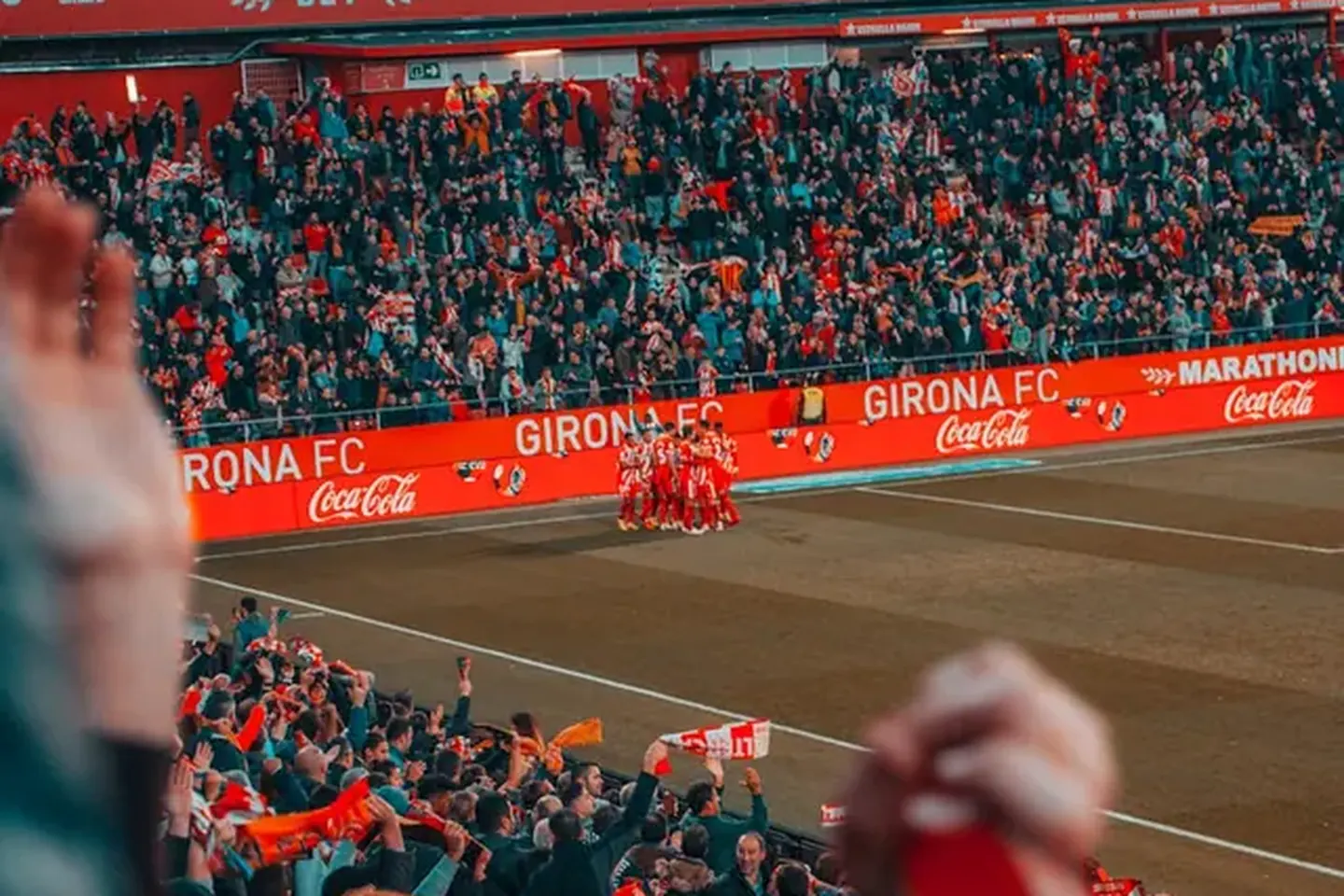
One of the most symbolic moments in the Stadium of Light's history occurred not at the ground itself but in London. At the 2019 EFL Trophy final at Wembley Stadium, an estimated 40,000 Sunderland fans travelled to support the team—a remarkable turnout for a third-tier club. This display of loyalty became a defining image of Sunderland's fan culture, reinforcing the club's reputation for having one of the most dedicated supporter bases in English football. The Stadium of Light itself has been the venue for several lower-league playoff matches and cup runs.
### Sunderland 'Til I Die Documentary
The Netflix documentary series "Sunderland 'Til I Die" (2018–2020) brought global attention to the club and its stadium. The series captured the emotional highs and lows of Sunderland's double relegation, with the Stadium of Light featuring prominently as the backdrop for fan reactions, boardroom tensions, and matchday drama. The documentary showed the stadium's atmosphere during difficult times, including sparse crowds for League One games juxtaposed with intense support. It helped introduce the Stadium of Light to an international audience, highlighting its significance as a symbol of the club's identity.
### Stadium Facilities and Modernisation
The Stadium of Light has undergone several upgrades since opening. In 2012, a new state-of-the-art pitch drainage system was installed. The stadium features modern hospitality suites, including the Montgomery Suite and the Roker Restaurant. In 2015, a new big screen was installed in the East Stand. The stadium also houses the club's megastore, ticket office, and museum. Concourse areas have been improved over time to enhance fan experience. The venue is also used for concerts, hosting acts such as Bruce Springsteen, Oasis, and Take That, with a concert capacity of up to 60,000.
### Accessibility and Transport
The Stadium of Light is well-served by public transport. Stadium of Light Metro station, on the Tyne and Wear Metro network, is located directly adjacent to the ground, providing connections to Newcastle city centre, Sunderland city centre, and South Tyneside. The stadium is also accessible by bus services and has limited car parking for permit holders. For away supporters, the South Stand is the designated section, with direct access from the Metro station. The stadium's location on the riverside offers scenic views of the Wear.
### Club Museum and Heritage
The Sunderland AFC Museum, located within the Stadium of Light, chronicles the club's history from its founding in 1879. Exhibits include memorabilia from the six First Division titles (1892, 1893, 1895, 1902, 1913, 1936), FA Cup wins (1937, 1973), and the club's Premier League history. The museum also features artefacts from Roker Park, including turnstiles, programmes, and photographs. It serves as a key attraction for fans visiting the stadium on non-matchdays.
### What to Check Before Visiting
- Ticket availability: Match tickets are typically sold through the club's official website. Availability depends on the fixture and demand. Check the club's ticketing portal for individual match sales.
- Seating location: The Roker End (North Stand) is the main home supporter area. Away fans are seated in the South Stand. Family zones are available in designated sections.
- Travel and parking: Public transport via the Metro is recommended. Car parking is limited and requires advance booking for most matches.
- Stadium tours: Non-matchday tours are available, offering access to dressing rooms, the pitch, and the museum. Book in advance through the club's website.
- Accessibility: The stadium provides accessible seating and facilities for disabled supporters. Contact the club's accessibility team for specific requirements.
### Stadium Statistics Table
| Feature | Detail |
|---|---|
| Location | Monkwearmouth, Sunderland, Tyne and Wear |
| Opened | July 1997 |
| Capacity | Approximately 49,000 (all-seated) |
| Pitch size | 105 x 68 metres |
| Stands | North (Roker End), East, South, West |
| Surface | Grass (Desso GrassMaster hybrid) |
| Owner | Sunderland AFC |
| Naming rights | None (not sold to corporate sponsor) |
### Historical Attendance Table
| Season | Division | Average Attendance |
|---|---|---|
| 1997–98 | First Division | Approx. 35,000 |
| 2000–01 | Premier League | Approx. 47,000 |
| 2016–17 | Premier League | Approx. 45,000 |
| 2018–19 | League One | Approx. 32,000 |
Reader Comments (0)