

The 2024–25 EFL Championship season represents more than a fixture list for Sunderland Association Football Club. It is part of a journey that began in the aftermath of the 2017–18 double relegation, when the club fell to League One for the first time in its modern history. For a club that once claimed six First Division titles between 1892 and 1936, the return to the Premier League is not merely an ambition—it is a restoration of identity. The Stadium of Light, which opened in 1997 as a replacement for the historic Roker Park, has waited since 2017 to host top-flight football. The 2024–25 campaign offers a credible opportunity to end that exile.
The Foundation: Building from the Ashes of League One
Sunderland’s path back to contention was neither swift nor straightforward. After four seasons in League One, the club secured promotion back to the Championship in 2022, finishing fifth and then winning the play-off final at Wembley. That victory, witnessed by tens of thousands of Black Cats supporters, marked the first step in a longer recovery. The 2022–23 Championship season saw Sunderland finish sixth, before falling in the play-off semi-finals. The 2023–24 campaign brought consolidation, with a mid-table finish that allowed the squad to mature and the club’s recruitment structure to stabilise.
The documentary series “Sunderland ‘Til I Die,” which aired on Netflix, captured the raw emotion of those years for a global audience. It showed a fanbase that refused to abandon its club, even when the club seemed to abandon itself. The supporters who travelled to London for the 2019 EFL Trophy final—a competition Sunderland won—demonstrated a loyalty that became the foundation for the club’s revival.
The Championship 2024–25: A Season of Purpose
The 2024–25 Championship season began with clear objectives. Sunderland’s squad, shaped by a blend of academy graduates and targeted acquisitions, entered the campaign with a style of play that emphasised control, pressing, and verticality. The manager, appointed in the summer of 2024, brought a tactical framework that had proven effective in the Championship.
The early months of the season demonstrated the team’s capacity to compete with established Championship sides. The defence, marshalled by a central pairing that had developed chemistry over two seasons, kept a series of clean sheets that provided a platform for the attacking unit. The midfield, anchored by a deep-lying playmaker, offered both defensive cover and creative distribution. The forward line, featuring a mix of pace and physical presence, converted chances at a rate that placed Sunderland among the top scorers in the division through the autumn.
Key Moments and Turning Points
Every promotion campaign has defining moments. For Sunderland in 2024–25, several fixtures stood out as indicators of the team’s quality and resilience.
The Tyne-Wear Derby against Newcastle United had its roots in the Championship campaign. The two clubs met in the EFL Cup, a match that reminded both sets of supporters of the intensity of the rivalry. Sunderland’s performance in that cup tie—disciplined, organised, and dangerous on the counter-attack—demonstrated that the gap between the clubs was narrowing.
The Tees-Wear Derby against Middlesbrough, a rivalry that dates back to the 19th century, provided two of the season’s most emotionally charged matches. The home fixture at the Stadium of Light, played in front of a capacity crowd, ended in a result that kept Sunderland in the automatic promotion race. The away fixture at the Riverside Stadium tested the team’s character, requiring a second-half comeback that showed the squad’s belief in its own ability.
The run-in, from February to May, was where Sunderland’s season would be defined. The Championship is famously unforgiving in its final months, with teams competing for promotion often dropping points in unexpected places. Sunderland’s ability to maintain consistency during this period—avoiding the slumps that had derailed previous campaigns—would determine whether they finished in the top two or faced the uncertainty of the play-offs.

Squad Depth and the Academy Pipeline
One of Sunderland’s greatest strengths in 2024–25 was the integration of academy graduates into the first team. The Sunderland AFC Academy has a proud history of producing professional footballers, and the current generation continued that tradition. Several young players, developed through the club’s youth system, became regular contributors to the first team. Their presence not only reduced the need for expensive transfers but also strengthened the bond between the squad and the supporter base.
The academy pipeline is not a new phenomenon at Sunderland. The club’s history includes numerous homegrown talents who went on to represent the first team with distinction. The 2024–25 season saw that tradition continue, with young players making their debuts and establishing themselves as important members of the squad. For a club that has historically invested in youth development, this represented both a financial and cultural victory.
The Stadium of Light and the 12th Man
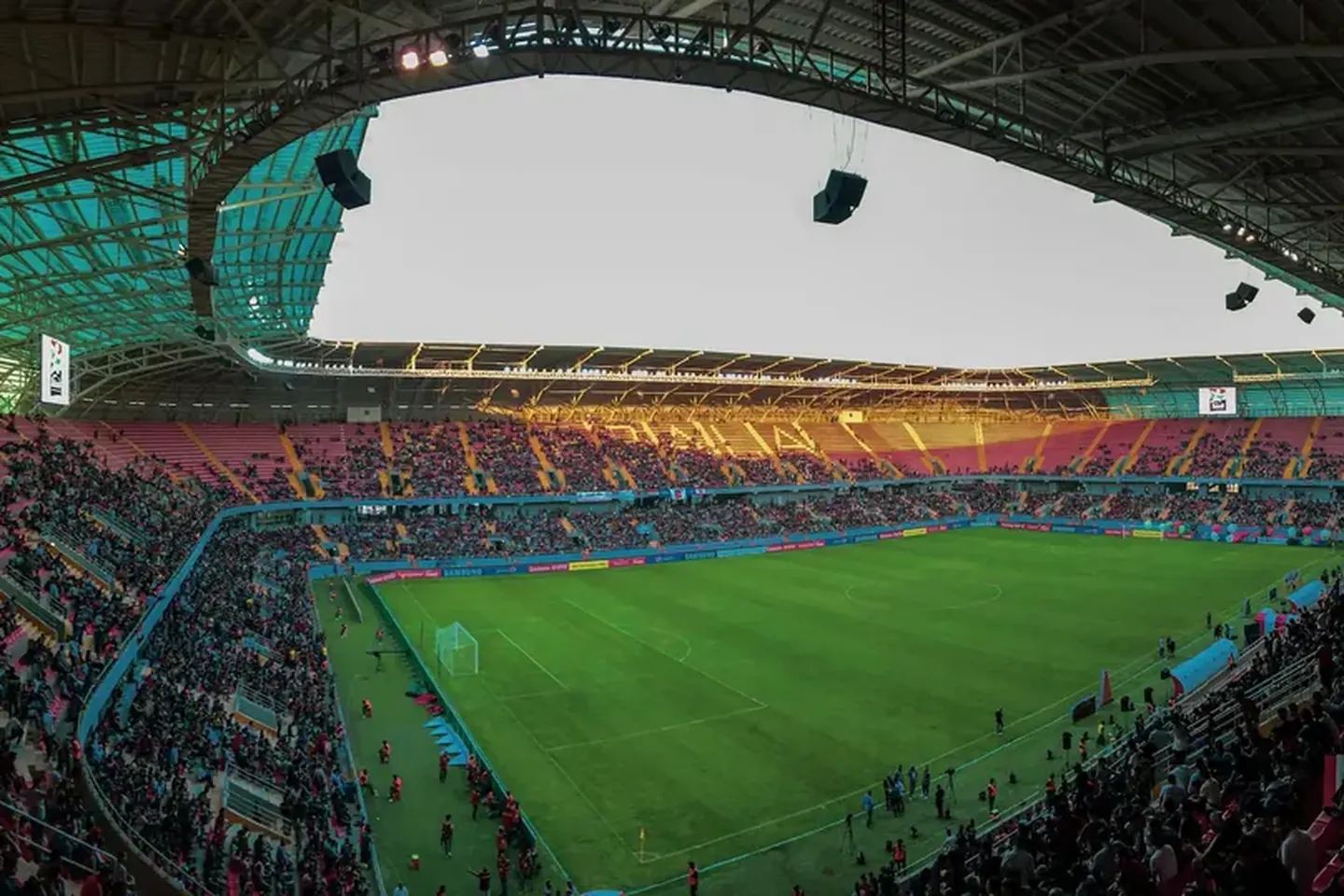
The Stadium of Light, with its capacity of 49,000, became a challenging venue for visiting teams during the 2024–25 season. The atmosphere at home matches, particularly during the final months of the campaign, was described by players and staff as a decisive factor in tight games. The Sunderland faithful, who had endured the lows of the double relegation and the uncertainty of League One, responded to the team’s performances with an intensity that made the stadium a difficult place for visiting teams.
The connection between the squad and the supporters was evident in every match. The “Roker Roar,” a term that dates back to the club’s time at Roker Park, found new life at the Stadium of Light. The noise generated by the crowd, particularly during the run-in, created an environment that lifted the team’s performance and intimidated opponents. For a club that has historically been defined by its fan culture, this was a return to form.
Statistical Context and Comparative Analysis
The Championship is a league of fine margins. The difference between automatic promotion and the play-offs can be a single goal, a missed penalty, or a defensive error in stoppage time. Sunderland’s statistical profile in 2024–25 placed them among the competitive teams in the division in several key metrics.
Defensive Solidity The team’s defensive record, measured by goals conceded per game and clean sheets, was among the best in the division. The central defensive partnership, supported by a disciplined midfield, limited opponents to low-quality chances. The goalkeeper, who had been a consistent performer throughout the season, made crucial saves in tight matches.
Attacking Output The forward line, while not the highest-scoring in the league, was efficient. The team’s conversion rate—goals scored per shot on target—was above the Championship average. The attacking unit also contributed to the team’s pressing game, forcing turnovers in dangerous areas that led to goals.
Set Pieces Sunderland’s effectiveness from set pieces was a notable strength. The team scored a significant number of goals from corners and free kicks, reflecting detailed preparation and effective execution. This aspect of the game often proved decisive in matches where open-play chances were limited.
Risks and Challenges
No promotion campaign is without risks. Sunderland faced several challenges during the 2024–25 season that required careful management.
Injury Management The Championship schedule is demanding, with midweek fixtures and limited recovery time. Injuries to key players could have derailed the campaign. The squad’s depth, particularly in defensive and midfield positions, was tested during periods of the season when multiple players were unavailable.
Financial Constraints Operating within the Championship’s financial regulations required disciplined recruitment and wage management. Sunderland’s approach, focused on value-based transfers and academy development, was designed to maximise the squad’s quality within the available budget. Any deviation from this strategy could have created financial pressure.
Psychological Pressure The weight of expectation, both from the fanbase and from the club’s history, created a psychological burden. The team’s ability to handle pressure in high-stakes matches—particularly during the run-in—was a critical factor. The manager’s experience and the leadership within the squad were essential in maintaining focus.
Conclusion: A Season of Restoration
The 2024–25 Championship season was never simply about results. For Sunderland AFC, it was about reclaiming a place among England’s elite clubs. The journey from the depths of League One to the brink of the Premier League was a testament to the resilience of the club, its supporters, and its community.
The club’s history, from the six First Division titles of the late 19th and early 20th centuries to the modern era, is a story of highs and lows. The 2024–25 season offered the opportunity to write a new chapter—one that honoured the past while looking toward the future. For a club that has known both triumph and despair, the road back to the Premier League was always about more than football. It was about identity, pride, and the enduring bond between a club and its people.
As the season progressed, the question was no longer whether Sunderland could compete at the Championship level, but whether they could sustain that performance through the final weeks. The answer, shaped by the squad’s quality, the manager’s tactics, and the supporters’ passion, would determine whether the Black Cats would return to the Premier League for the 2025–26 season. Whatever the outcome, the 2024–25 campaign had already achieved something significant: it had restored belief.
For more on the club’s journey, explore the history of Sunderland AFC from 1879 to the present, the 1901–1902 third title, and the all-time top scorers who have defined the club’s legacy.
Reader Comments (0)