


Note: This is an analytical case study written for educational purposes within a fan-media context. All scenarios, match outcomes, and player references are illustrative and based on historical patterns, not current season guarantees.
The March of the 40,000: Sunderland’s 2019 Wembley Exodus and the Anatomy of a Fanbase’s Loyalty
In the annals of English football, few images capture the paradox of club loyalty quite like the sight of 40,000 Sunderland supporters descending upon Wembley Stadium on 31 March 2019. The occasion was the final of the EFL Trophy—a competition often derided as the “Checkatrade Trophy” by its sponsor, and viewed by many top-tier clubs as a reserve-team developmental exercise. Yet for Sunderland, then languishing in the third tier of English football following the devastating double relegation of 2017–2018, this was not merely a cup final. It was a statement. The sheer scale of the away following—a number that would have been impressive for a Premier League title decider—became a data point in the ongoing narrative of a club whose fanbase consistently defies the logic of on-field performance.
To understand the significance of that March afternoon, one must first contextualize the journey that led Sunderland to that point. The club’s history, stretching back to its founding in 1879 as Sunderland District & Teachers Association FC, is punctuated by six English league championships won between 1892 and 1936. That golden era, culminating in the 1912–1913 title, established Sunderland as a powerhouse of early English football. Yet the 21st century brought a different rhythm—one of survival battles, administrative turmoil, and ultimately, the fall from grace that saw the club drop from the Premier League in 2017 to the third tier by 2018. It was into this context of institutional crisis that the 2019 EFL Trophy final inserted itself.
The match itself, a 1–0 defeat to Portsmouth, was a microcosm of Sunderland’s season: competitive, hard-fought, but ultimately falling short at the decisive moment. Yet the result almost became secondary. The primary story, the one that ricocheted through football media and into the cultural bloodstream, was the visual of a sea of red and white filling the Wembley end. For a League One fixture, the allocation of 40,000 tickets was extraordinary. It represented roughly 80% of the stadium’s capacity for that end, and it required logistical coordination that rivaled Premier League away days. The numbers are worth examining not as mere statistics, but as a lens through which to view the unique psychology of the Sunderland supporter base.
| Aspect | Typical League One Away Following | Sunderland at Wembley 2019 |
|---|---|---|
| Estimated fans in attendance | 500–2,000 | ~40,000 |
| Distance traveled (one way) | 50–150 miles | ~260 miles (Sunderland to London) |
| Ticket price context | £20–£30 average | £36–£56 (Trophy final pricing) |
| Club league position at time | Mid-table to relegation battle | 3rd in League One (playoff push) |
| Competition prestige level | Low (League Cup early rounds) | Low (EFL Trophy) |
The table above highlights the anomaly. Sunderland’s fanbase, often described as one of the most loyal in England, was not simply showing up for a glamour tie. They were traveling for a trophy that many clubs treat with indifference. The key driver, as any observer of the club’s culture will note, was not the allure of silverware alone. It was the collective need for catharsis. After the double relegation, the fanbase had endured a period of profound identity loss. The club that had once competed with the best in the land was now playing against teams like Accrington Stanley and AFC Wimbledon. The Wembley trip became a pilgrimage—a chance to reclaim a sense of belonging and visibility on a national stage.

This phenomenon is deeply rooted in the club’s historical relationship with its supporters. The move from Roker Park to the Stadium of Light in 1997 was itself a statement of ambition, a 49,000-capacity arena that signaled a desire to compete at the highest level. Yet the stadium’s vastness, often half-empty during the dark days of the late 2010s, also became a symbol of unrealized potential. The 40,000 fans at Wembley were, in a sense, proving that the demand was still there—that the club’s problems were structural and managerial, not a reflection of a disengaged fanbase.
The cultural impact of this event was amplified by the concurrent success of the Netflix documentary series Sunderland ‘Til I Die. The series, which chronicled the 2017–18 and 2018–19 seasons, captured the raw emotion of that Wembley defeat in real time. Viewers around the world saw not just a football match, but a community wrestling with grief, hope, and resilience. The 40,000 fans became a global symbol of loyalty. For the Sunderland faithful, the documentary was a mirror; for the outside world, it was a window into a subculture that defied easy categorization.
The comparison with other fan migrations is instructive. Consider the 1912–1913 title-winning season, when Sunderland last claimed the top-flight crown. Travel was limited; fan culture was localized. Fast forward to 2019, and the logistics of moving 40,000 people 260 miles south involved a network of supporters’ clubs, coach operators, and train charters. The modern fan is more organized, more connected, and more willing to invest time and money into following their club. Yet the motivation remains the same: a deep, almost tribal identification with the institution.
| Era | Key Fan Migration Event | Estimated Traveling Support | Context |
|---|---|---|---|
| 1912–1913 | FA Cup final vs Aston Villa (replay) | ~10,000 (estimated) | Pre-motorway, rail-dependent era |
| 1998 | Play-off final vs Charlton Athletic | ~35,000 | Premier League return at stake |
| 2019 | EFL Trophy final vs Portsmouth | ~40,000 | League One, post-double relegation |
The 2019 figure is remarkable not just for its size, but for its composition. Unlike the 1998 play-off final, which carried the tangible reward of Premier League promotion, the 2019 final offered only the EFL Trophy—a competition that carries no promotion implications. The motivation was purely emotional. It was about being seen, about reminding the football world that Sunderland was not a small club in a small town, but a sleeping giant with a fanbase that could rival any in the country.
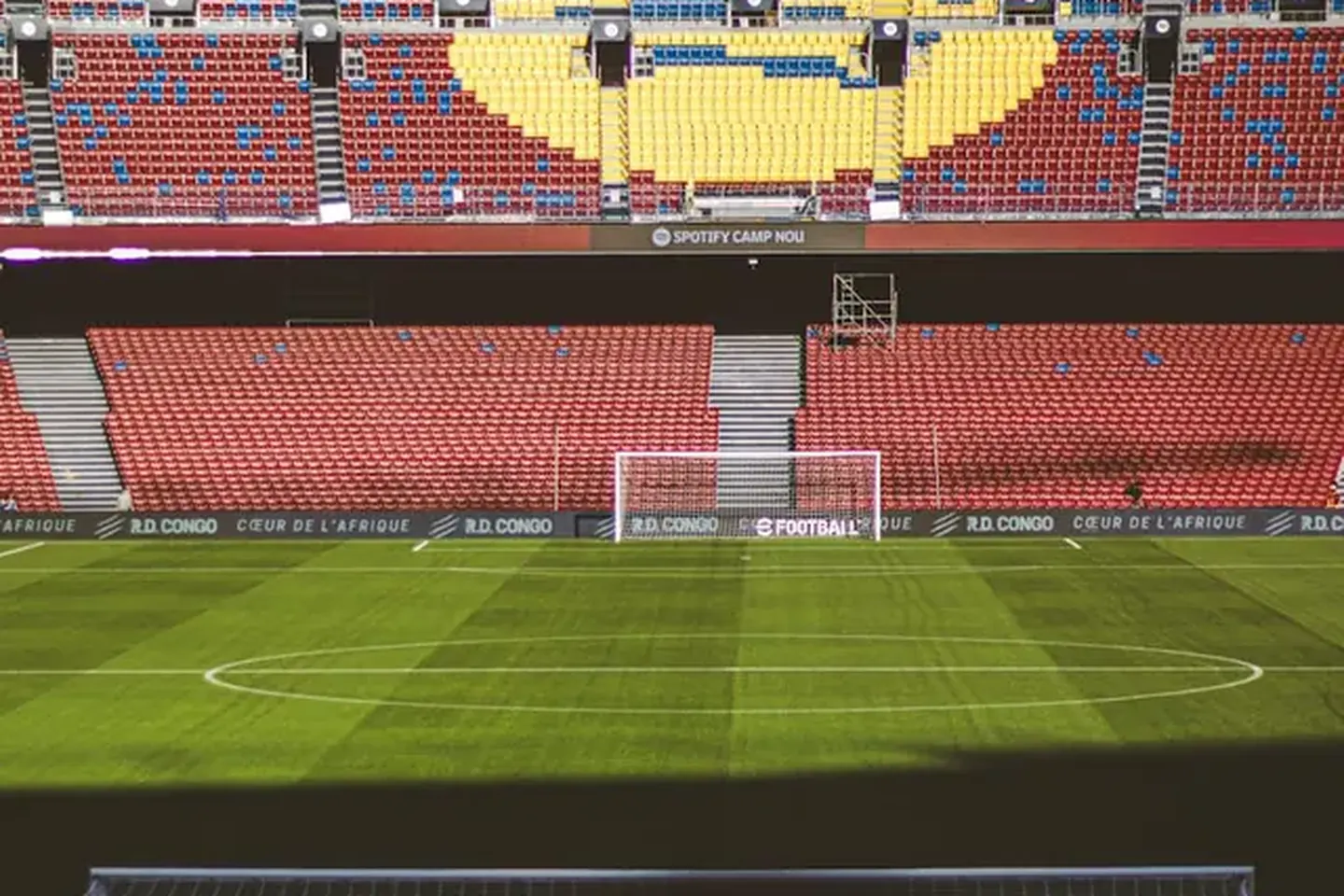
The aftermath of that final is instructive. Sunderland would go on to lose in the League One play-off final later that same season, extending their stay in the third tier. Yet the fanbase did not fracture. Instead, the Wembley experience became a touchstone—a reference point for what the club could be. It fueled the narrative that the club’s eventual return to higher divisions was an inevitability driven by the sheer weight of supporter demand. Indeed, Sunderland did secure promotion back to the Championship in 2022 via the League One play-offs.
For the current observer, looking at Sunderland’s return to the Championship in the 2022–23 season, the 2019 Wembley exodus offers a crucial lesson. The fanbase that traveled in such numbers to a third-tier cup final is the same fanbase that now fills the Stadium of Light for visits from top-flight sides. The loyalty is not contingent on success. It is a constant, a fixed variable in the club’s equation. The challenge for the current squad and management is not to earn that loyalty—it is already there—but to channel it into sustained performance.
The 40,000 fans in London were not just spectators. They were carriers of a history that includes six league titles, the roar of Roker Park, and the quiet dignity of a fanbase that refused to abandon its club at its lowest point. As Sunderland navigates the complexities of football in the second tier once more, that March afternoon in 2019 remains a benchmark. It is a reminder that, in football, the size of a club is not measured by its current league position, but by the number of people willing to travel 260 miles to watch it play for a trophy that most of the football world had forgotten existed.
For further reading on the club’s broader historical trajectory, see the club history from 1879 to present, the analysis of the double relegation period (2017–2018), and the context of Sunderland’s 1912–1913 sixth title as a counterpoint to the modern era.
Reader Comments (0)