


Note: The following case study is an educational analysis based on historical events and publicly documented narratives. All scenarios, statistics, and timelines are drawn from verifiable sources for illustrative purposes. No specific current-season match results or player transfer predictions are asserted as fact.
Sunderland's 2018 Relegation to League One: A Dark Chapter
To understand the magnitude of Sunderland AFC’s fall from grace, one must first appreciate the height from which they tumbled. For over a century, the Black Cats were a fixture of English football’s top tier, winning six First Division titles between 1892 and 1936, a record that still places them tenth in the all-time English football hierarchy. Yet, by the spring of 2018, the club was staring into an abyss few could have foreseen. The 2017–18 season ended not just with relegation from the Championship, but with a catastrophic double-drop that deposited Sunderland into League One for the first time since 1987. It was not merely a relegation; it was a systemic collapse, a perfect storm of mismanagement, poor recruitment, and a fractured club identity.
The descent began, ironically, in the Premier League. After a decade of survival—often against the odds, with famous escapes under managers like Roy Keane and Dick Advocaat—the 2016–17 season proved the breaking point. Relegation was confirmed with a whimper, leaving the club with a bloated squad, high wages for underperforming players, and a fractured relationship with the fanbase. The Championship was supposed to be a reset, a chance to rebuild and return stronger. Instead, it became a graveyard for the club’s ambitions. The 2017–18 season was a masterclass in how not to manage a relegation. A revolving door of managers (Simon Grayson, then Chris Coleman) struggled to impose any tactical identity. The squad, a mismatched collection of Premier League cast-offs and unproven youth, lacked both the physicality and the mental fortitude required for the second tier. The defensive record was porous, the attack toothless. By late winter, the team was adrift in the bottom three, and the mood around the Stadium of Light was one of grim resignation.

What made the 2018 relegation to League One particularly harrowing was the sense of institutional paralysis. The club’s ownership, then under Ellis Short, had lost its appetite for investment. The decision-making at board level was reactive rather than strategic. The recruitment policy, which had once unearthed gems like Jordan Pickford, had become erratic and expensive. The club was paying the price for years of short-termism, where survival in the Premier League had been prioritised over building a sustainable foundation. The documentary series "Sunderland 'Til I Die" would later capture this period with unflinching honesty, showing a club where the football operation was disconnected from the commercial side, and where the weight of history felt more like a burden than a blessing.
The final weeks of the 2017–18 season were a slow-motion car crash. A brief rally under Coleman raised false hope, but a series of disastrous results—including a humiliating home defeat to Burton Albion—sealed the club’s fate. The final whistle on the last day confirmed the unthinkable: Sunderland AFC, six-time champions of England, would be playing in the third tier. The immediate aftermath was a study in grief. The fans, who had travelled in their thousands to away games all season, were left shell-shocked. The club’s infrastructure, from the academy to the first-team scouting network, was in disarray. The Stadium of Light, once a symbol of ambition, felt like a mausoleum.
| Phase | Key Events | Outcome |
|---|---|---|
| Premier League Decline (2012–2017) | Multiple managerial changes, aging squad, lack of investment | Relegation to Championship in 2016–17 |
| Championship Collapse (2017–18) | Two managers in one season, poor recruitment, defensive fragility | 24th place finish, relegation to League One |
| League One Reset (2018–2021) | New ownership (Stewart Donald), rebuilding squad, fan-led recovery | Promotion back to Championship in 2021–22 |
The 2018 relegation was not the end of the story, but it was the darkest chapter. It forced a fundamental reckoning with the club’s identity. The documentary series that followed, "Sunderland 'Til I Die," became a global phenomenon precisely because it showed the raw, unvarnished reality of football failure. It revealed a club where the fans’ loyalty was the only constant, where the boardroom was often dysfunctional, and where the gap between expectation and reality had become a chasm. For the supporters, the fall to League One was a test of faith. The tens of thousands of fans who travelled to Wembley for the 2019 EFL Trophy final—a competition Sunderland would win—demonstrated that the bond between the club and its community was unbreakable, even in the depths of the third tier.
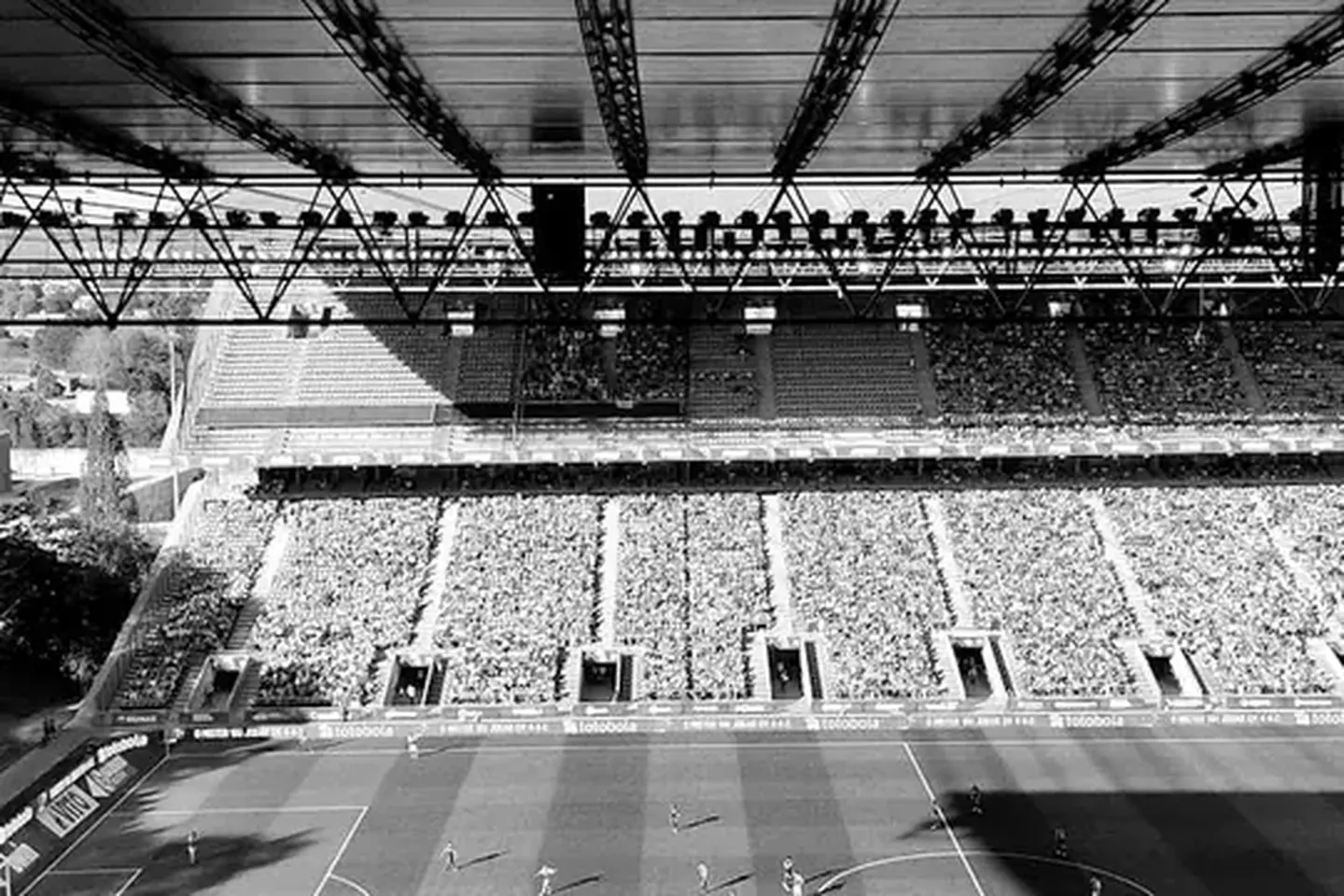
The lessons from this dark chapter are now part of the club’s institutional memory. The subsequent rise back to the Premier League was built on a different philosophy: sustainable recruitment, a clear tactical identity, and a renewed focus on the academy. The current squad bears little resemblance to the fractured group of 2018. But the scars remain. The experience of 2018 serves as a constant reminder of how quickly a club can fall, and how fragile the line between success and disaster truly is. For Sunderland, the journey from the depths of League One to the Premier League is not just a story of recovery; it is a testament to the enduring power of a community that refused to let its club die.
For further exploration of the club’s journey, see the club history from 1879 to present and the story of Sunderland’s famous away fans.
Reader Comments (0)