


The return of Sunderland AFC to the Premier League for the 2025/26 season has not merely been a story of survival; it has been a case study in tactical adaptation. After securing promotion via the 2024/25 EFL Championship play-offs, the Black Cats entered England’s top flight with a squad built on youthful exuberance and a clear tactical identity. However, the gulf in quality between the Championship and the Premier League is notorious, and head coach Regis Le Bris has had to evolve his system mid-season to keep the side competitive. This article dissects the primary formations deployed by Sunderland in the 2025/26 campaign, the rationale behind the tactical shifts, and the key personnel who make each setup function.
The Primary System: 4-2-3-1 as the Base Structure
Throughout the early months of the 2025/26 season, Sunderland’s default formation has been a fluid 4-2-3-1. This setup is not a surprise; Le Bris employed variations of it during the promotion campaign, and it offers a balance between defensive solidity and attacking width. In possession, the full-backs push high to provide width, while the two holding midfielders—typically a ball-winner and a deep-lying playmaker—shield the centre-backs and initiate transitions.
The key to this formation’s success has been the double pivot. The defensive midfielder is tasked with breaking up opposition attacks and covering the space vacated by the advancing full-backs. The deeper playmaker, often dropping between the centre-backs to receive the ball from the goalkeeper, dictates the tempo. Against high-pressing teams like Manchester City and Liverpool, this structure has allowed Sunderland to play through pressure, albeit with mixed results. The primary weakness of the 4-2-3-1 has been exposed against sides that overload the central midfield with a 3-4-3 or a diamond formation, leaving Sunderland’s double pivot outnumbered.
Tactical Shift to 3-4-3 for Defensive Resilience
As the season progressed into the winter months, and with injuries to key attacking players, Le Bris introduced a 3-4-3 formation for certain fixtures. This shift was primarily a response to the need for greater defensive solidity against top-half opposition. The back three provides an extra central defender, allowing Sunderland to defend with a narrow block and force attacks wide. The wing-backs, in this system, have dual responsibilities: they must track back to form a back five out of possession and provide the primary attacking width when Sunderland counter.
The 3-4-3 was notably effective in the goalless draw against Manchester United on 9 May 2026. Sunderland conceded possession but restricted United to few clear chances, demonstrating the defensive discipline required to grind out results in the Premier League. The formation, however, has a trade-off. It can leave Sunderland isolated in attack, relying heavily on the pace of the wide forwards to break from deep. When the opposition sits in a low block, Sunderland’s lack of a natural number ten in this system can lead to sterile possession.
Midfield Dynamics: The Engine Room
Regardless of the formation, Sunderland’s midfield has been the tactical fulcrum. In the 4-2-3-1, the number ten operates between the lines, linking the midfield to the striker. This player is crucial for breaking the lines of a compact defence. In the 3-4-3, the two central midfielders must be box-to-box, covering significant ground to support both defence and attack.
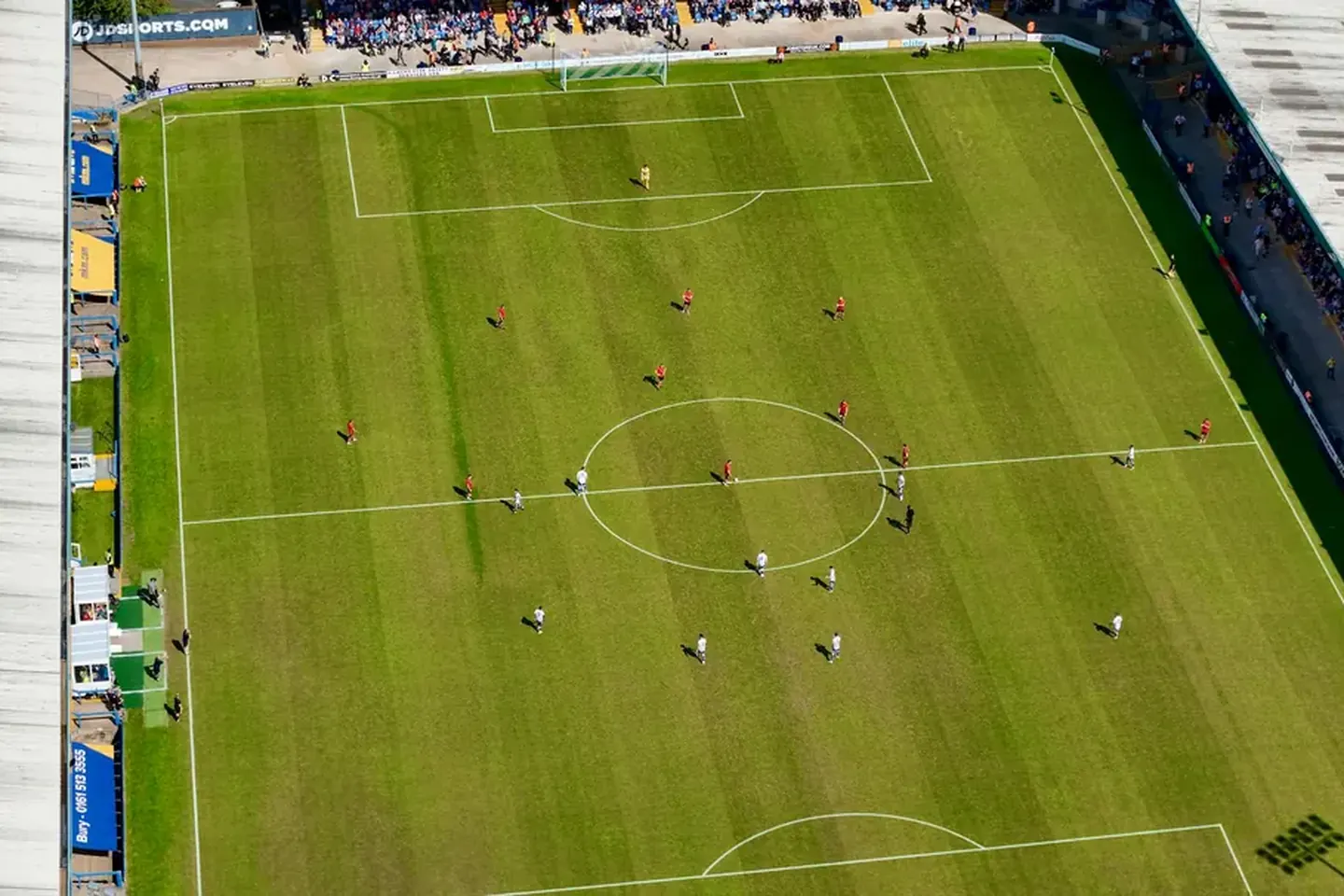
The midfield’s ability to press collectively has been a defining feature of Sunderland’s game. When the team presses high, the front four (or three) trigger the press, and the midfield steps up to compress space. This high-risk approach has yielded results—notably in the 2-1 Tyne-Wear Derby victory over Newcastle United on 22 March 2026, where Sunderland’s aggressive midfield pressing forced two defensive errors leading to goals. However, it has also left the defence exposed against teams with quick, direct passing.
Attacking Patterns and Wide Play
Sunderland’s attacking strategy is built on width and speed. In the 4-2-3-1, the wide attackers are instructed to stay high and wide, stretching the opposition’s back line. The full-backs underlap or overlap depending on the situation. The striker’s role is to occupy the centre-backs and create space for the number ten to arrive late in the box.
In the 3-4-3, the wing-backs are the primary source of crosses. The three forwards—two wide, one central—rotate positions to create mismatches. This fluidity was evident in the 3-1 win over Everton on 17 May 2026, where Sunderland’s forward line interchanged constantly, dragging Everton’s defenders out of position. The wide forwards also cut inside to shoot, adding a direct goal threat.
Defensive Organisation and Set-Piece Vulnerability
Defensively, Sunderland’s organisation has been a work in progress. The back four in the 4-2-3-1 relies on the midfield double pivot to screen the defence. When the midfield is bypassed, the centre-backs are often left in one-on-one situations against Premier League strikers—a vulnerability that has been exploited by top sides.
Set pieces remain a concern. Sunderland have conceded a number of goals from corners and free kicks, a statistical trend that Le Bris has publicly acknowledged as an area for improvement. The 3-4-3 formation offers better protection in the air with three centre-backs, but the team’s zonal marking system has occasionally led to confusion. The data on set-piece goals conceded is available through official Premier League match statistics, and it shows a clear pattern of vulnerability that opposition scouts have identified.

Key Player Profiles and Their Tactical Roles
The tactical setup is only as effective as the players executing it. While individual player profiles are covered in detail in the defenders and forwards sections, a few key roles define the system.
The goalkeeper’s distribution is vital; he must be comfortable playing short passes to beat the press. The centre-backs need pace to cover the high defensive line. The holding midfielders must read the game well to intercept passes. The wide attackers need pace and dribbling ability to take on defenders. The striker must hold up the ball and link play. Injuries to any of these key profiles have forced Le Bris to adjust his formations, highlighting the squad’s reliance on specific player attributes.
Comparison of Primary Formations
| Formation | Primary Use Case | Defensive Strength | Attacking Width | Midfield Control | Vulnerability |
|---|---|---|---|---|---|
| 4-2-3-1 | Home games against mid-table sides | Moderate | High (full-backs) | High (double pivot) | Counter-attacks through the middle |
| 3-4-3 | Away games against top-six sides | High (back three) | High (wing-backs) | Moderate (two CMs) | Lack of creativity in low-block situations |
Tactical Risks and Adaptations
The primary tactical risk for Sunderland in the 2025/26 season has been the inconsistency in applying the press. When the press is executed with high intensity, Sunderland can disrupt any opponent. When it falters, the team becomes disjointed, with gaps appearing between the lines. The second risk is the reliance on a small core of players for creativity. If the key playmaker is nullified by a man-marking system, Sunderland’s attacking output drops significantly.
Le Bris has shown tactical flexibility by switching formations mid-game, a trait that has earned him praise. However, the squad’s depth remains a concern. The academy has produced promising talent, as detailed in the players and squad profiles, but integrating young players into a Premier League survival fight is a delicate balance.
Sunderland’s tactical setup for the 2025/26 season is not a single formation but a dynamic system that adapts to the opponent and the match situation. The 4-2-3-1 provides the base structure, offering balance and control, while the 3-4-3 offers defensive resilience against stronger sides. The success of either system depends on the fitness and form of key players, the effectiveness of the press, and the team’s ability to minimise set-piece vulnerabilities. As the season progresses towards its climax, the tactical decisions made by Le Bris will be crucial in determining whether Sunderland secures its Premier League status for another year. For a deeper look at the individual components of this squad, explore the dedicated profiles on defenders and forwards.
Reader Comments (0)